日期
Street Vendors – Visual Narrative Design for Roadside Practitioners in Shenzhen
路边饭碗-深圳路边从业者视觉叙事设计
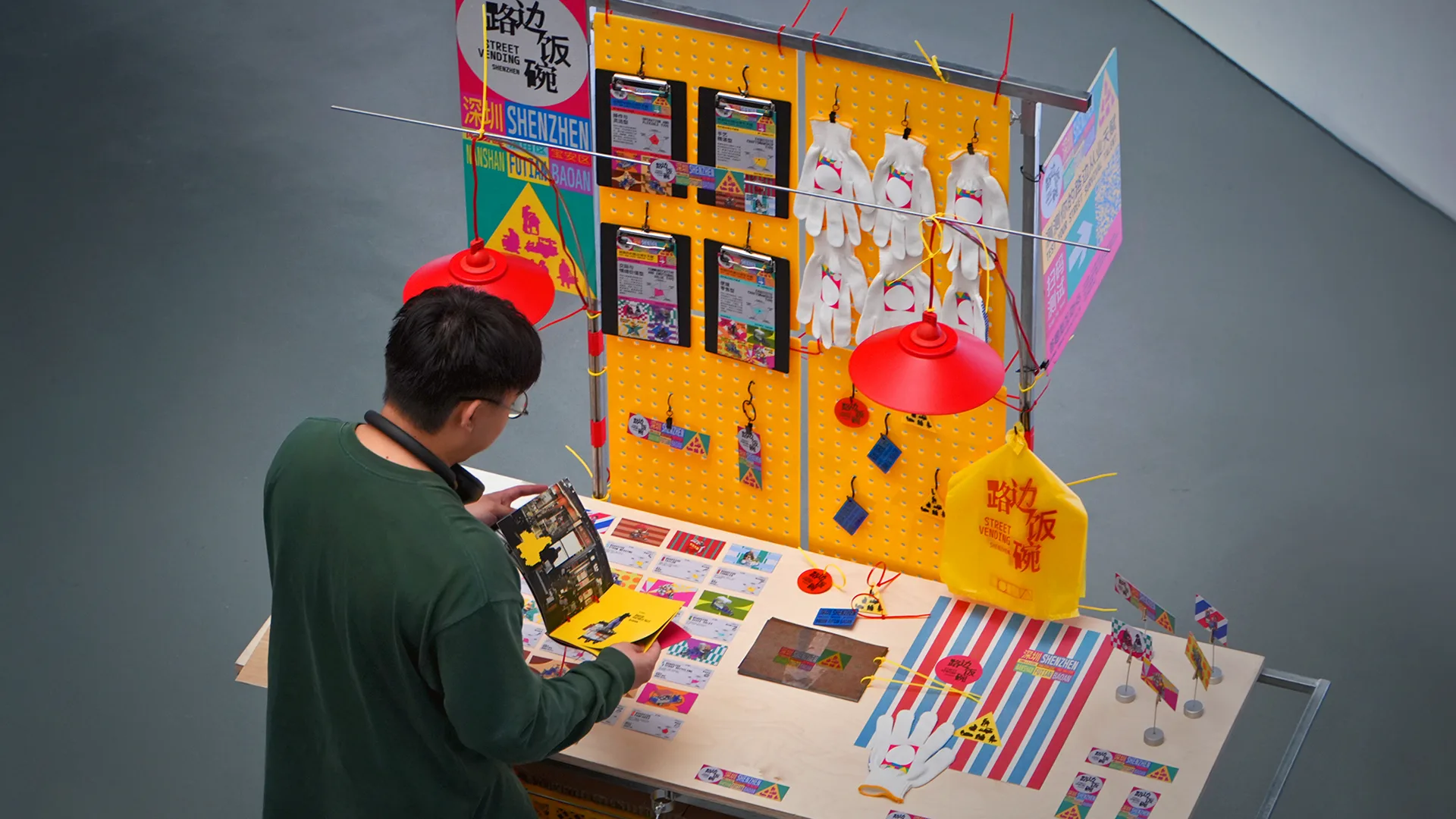
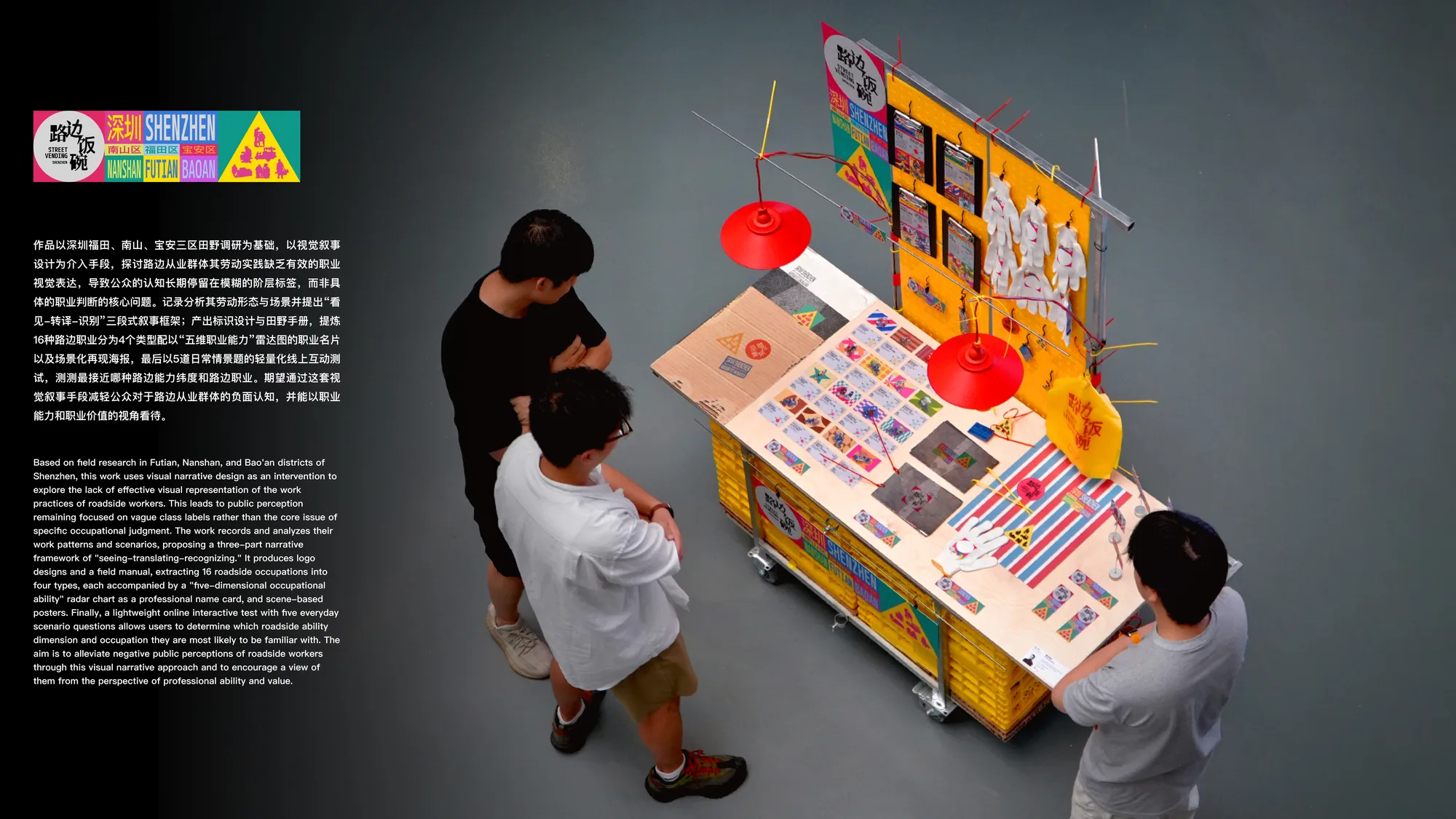
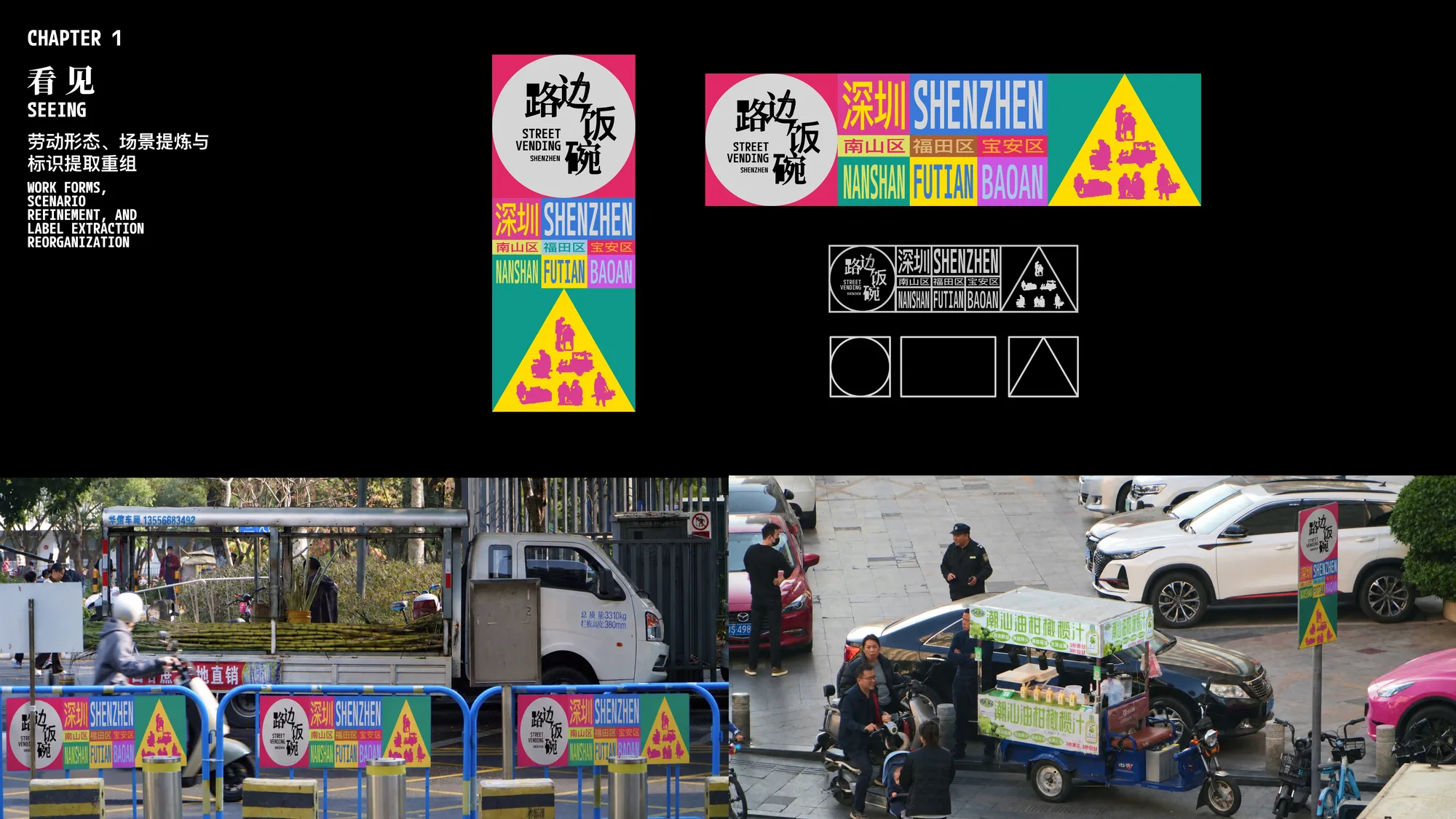
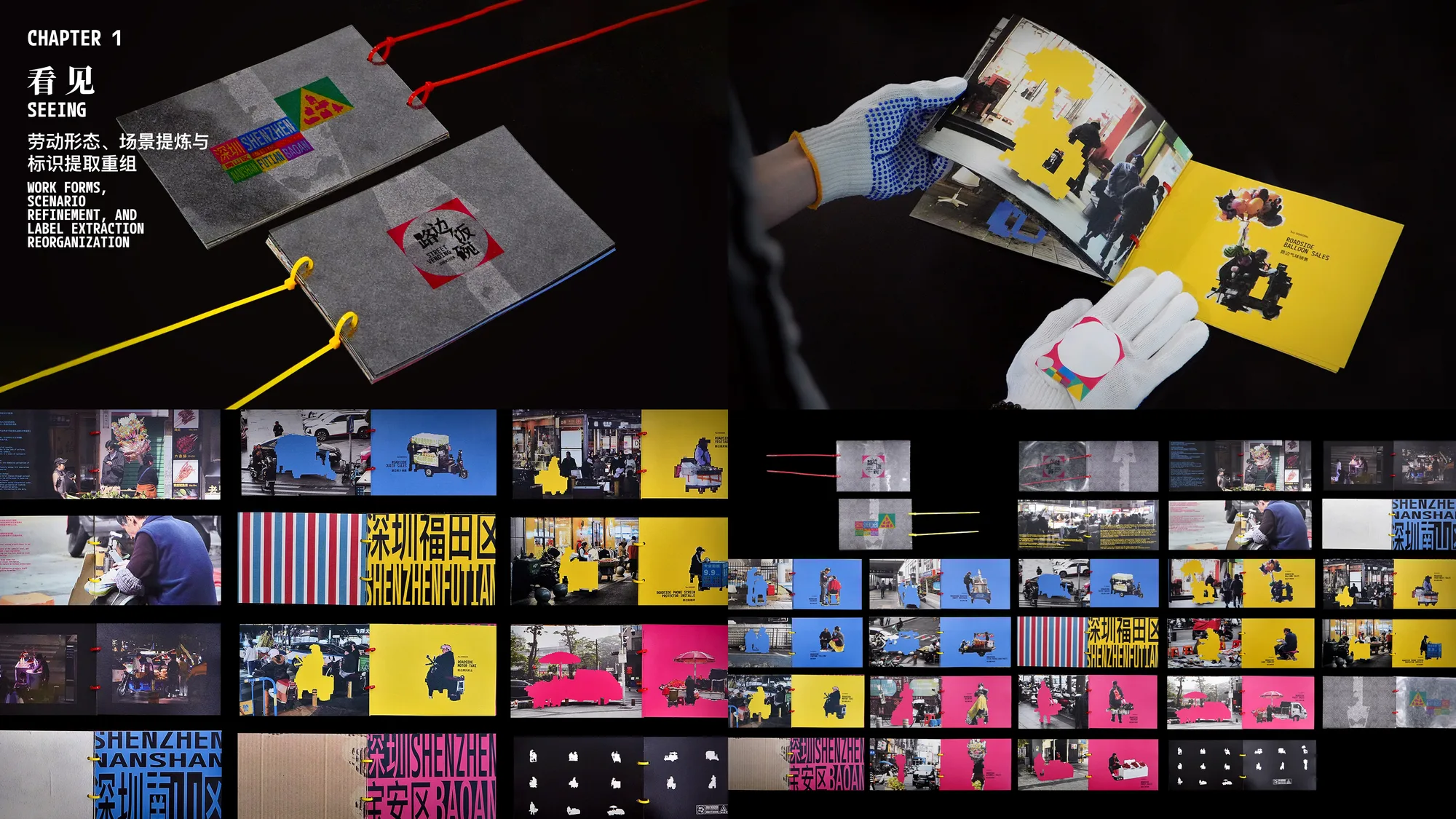
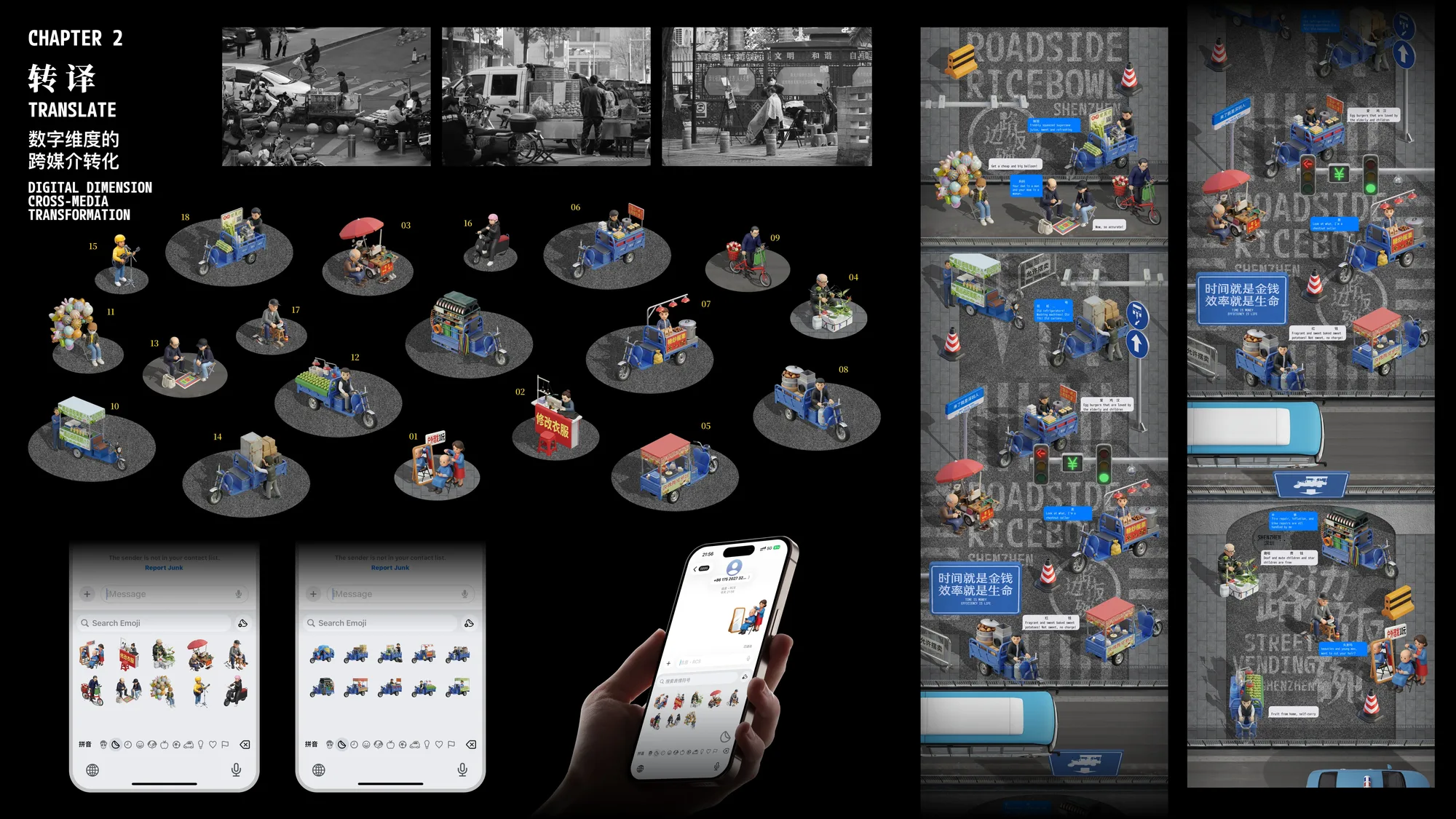
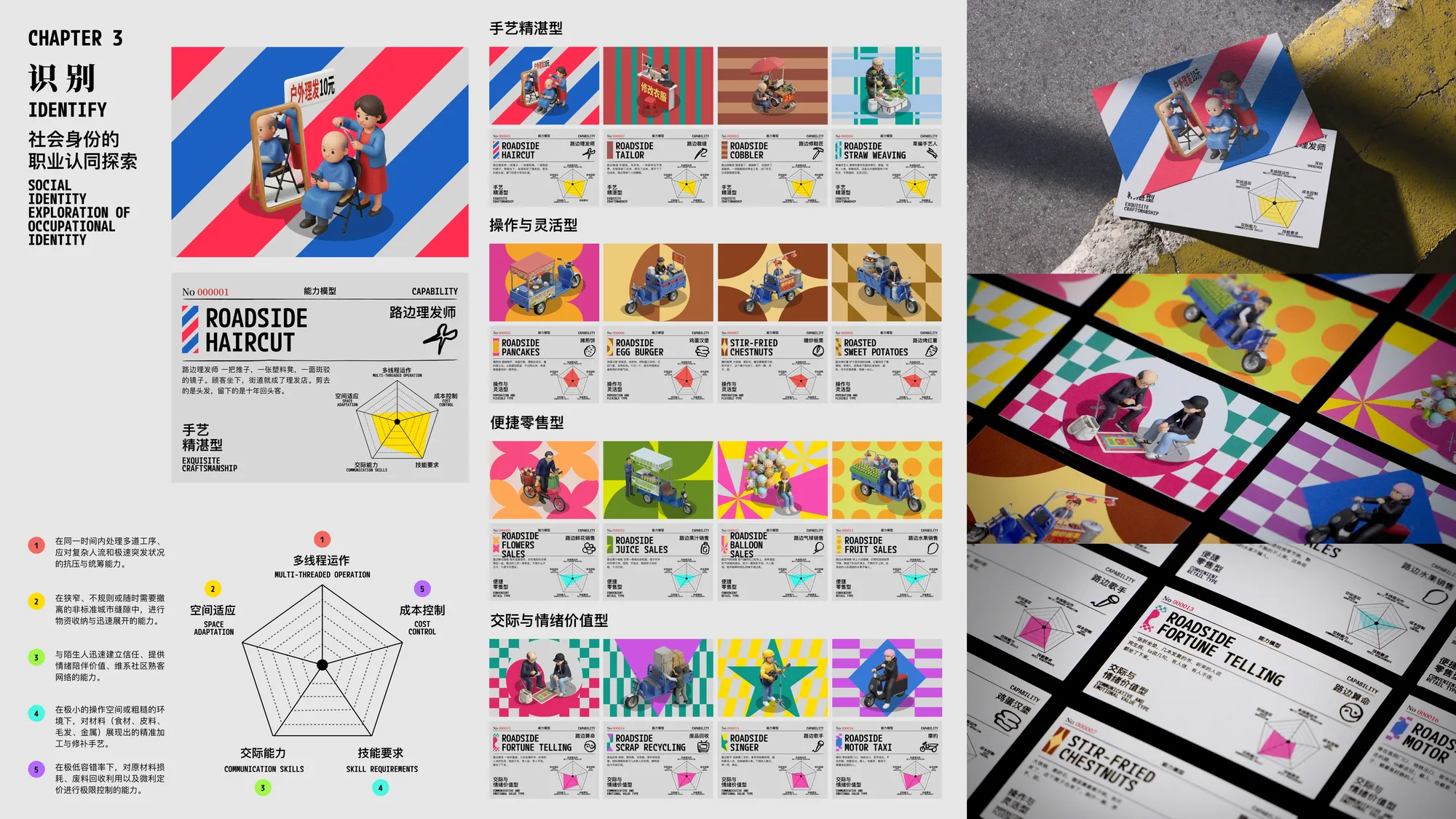
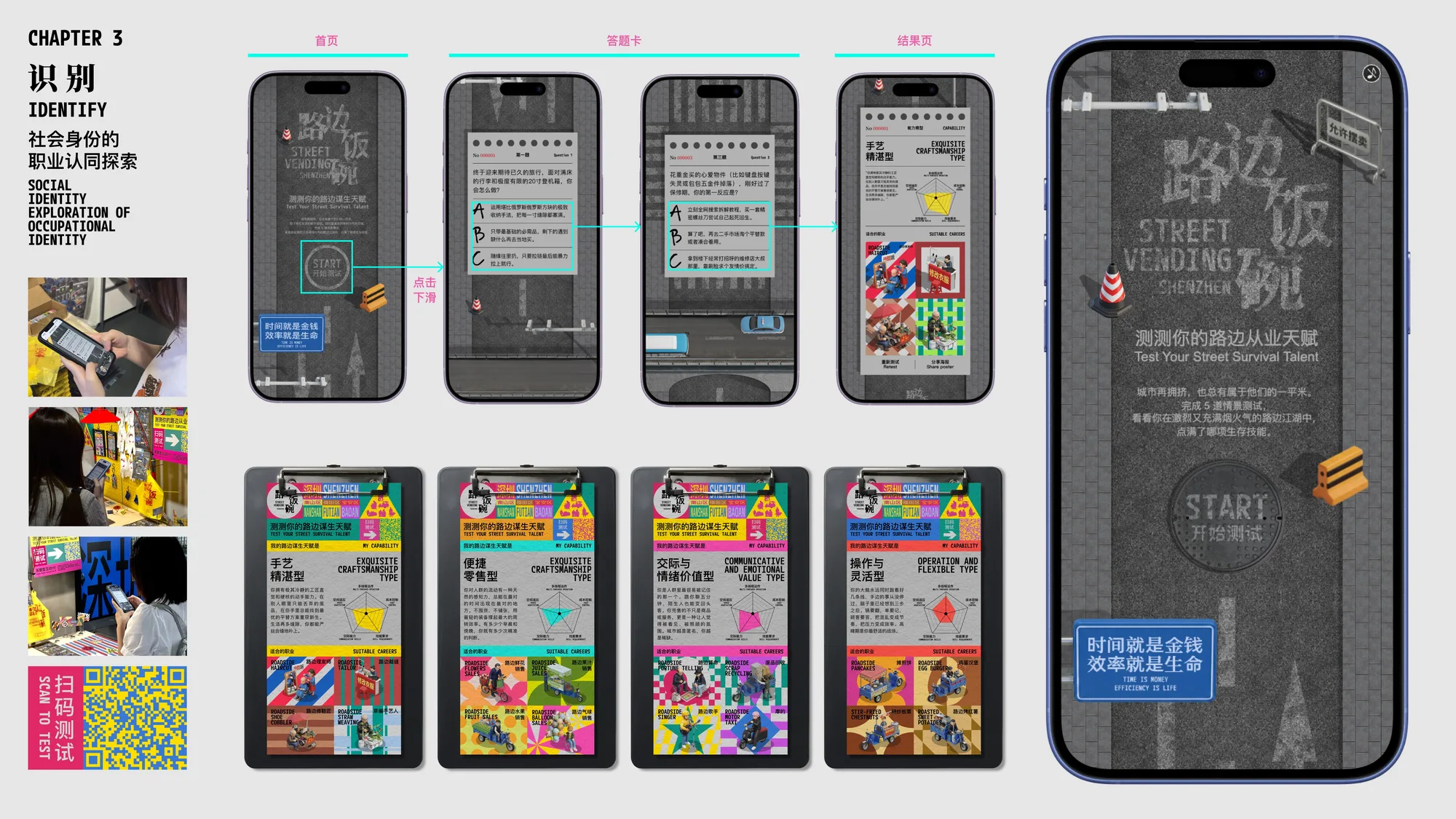
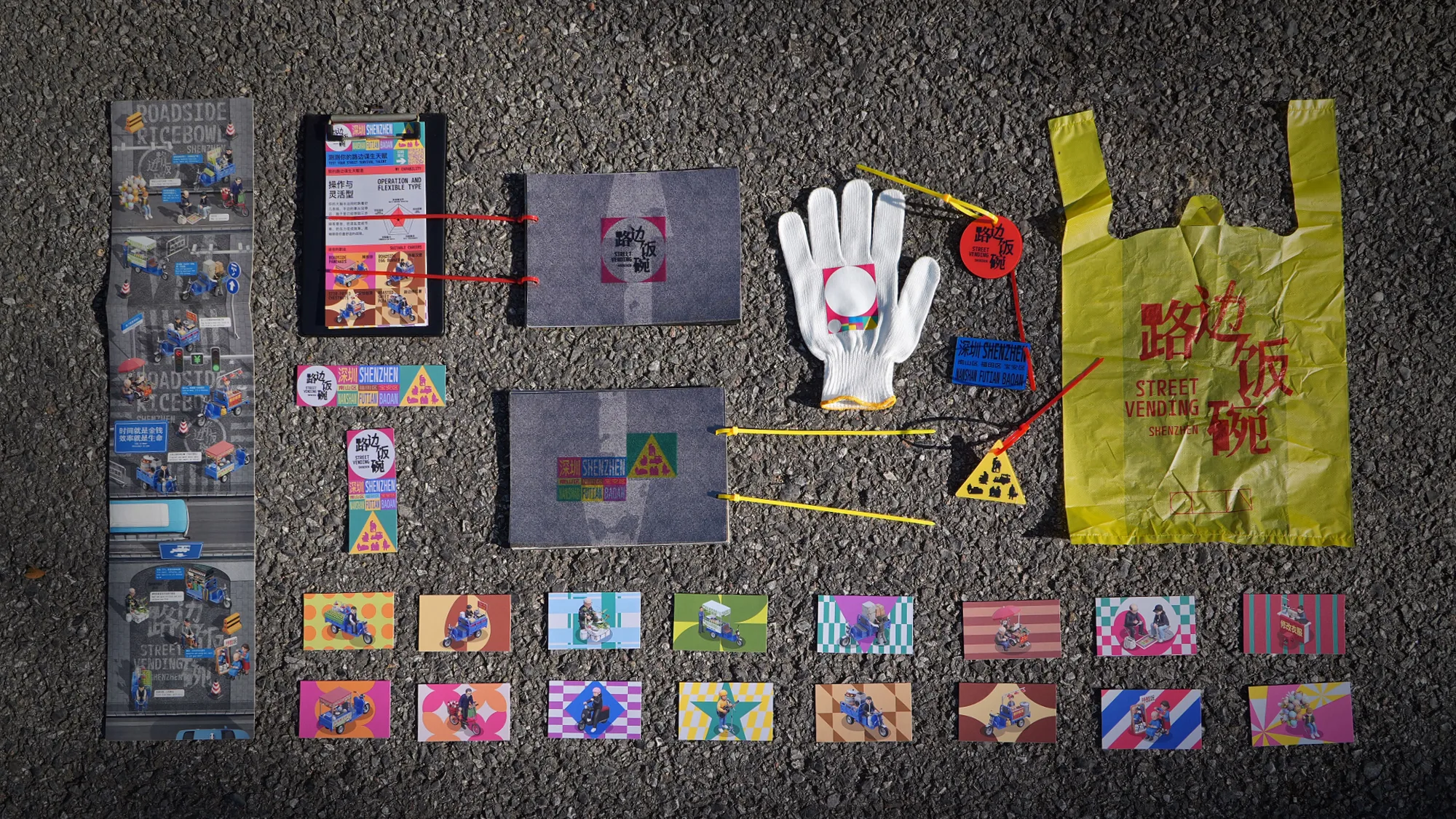
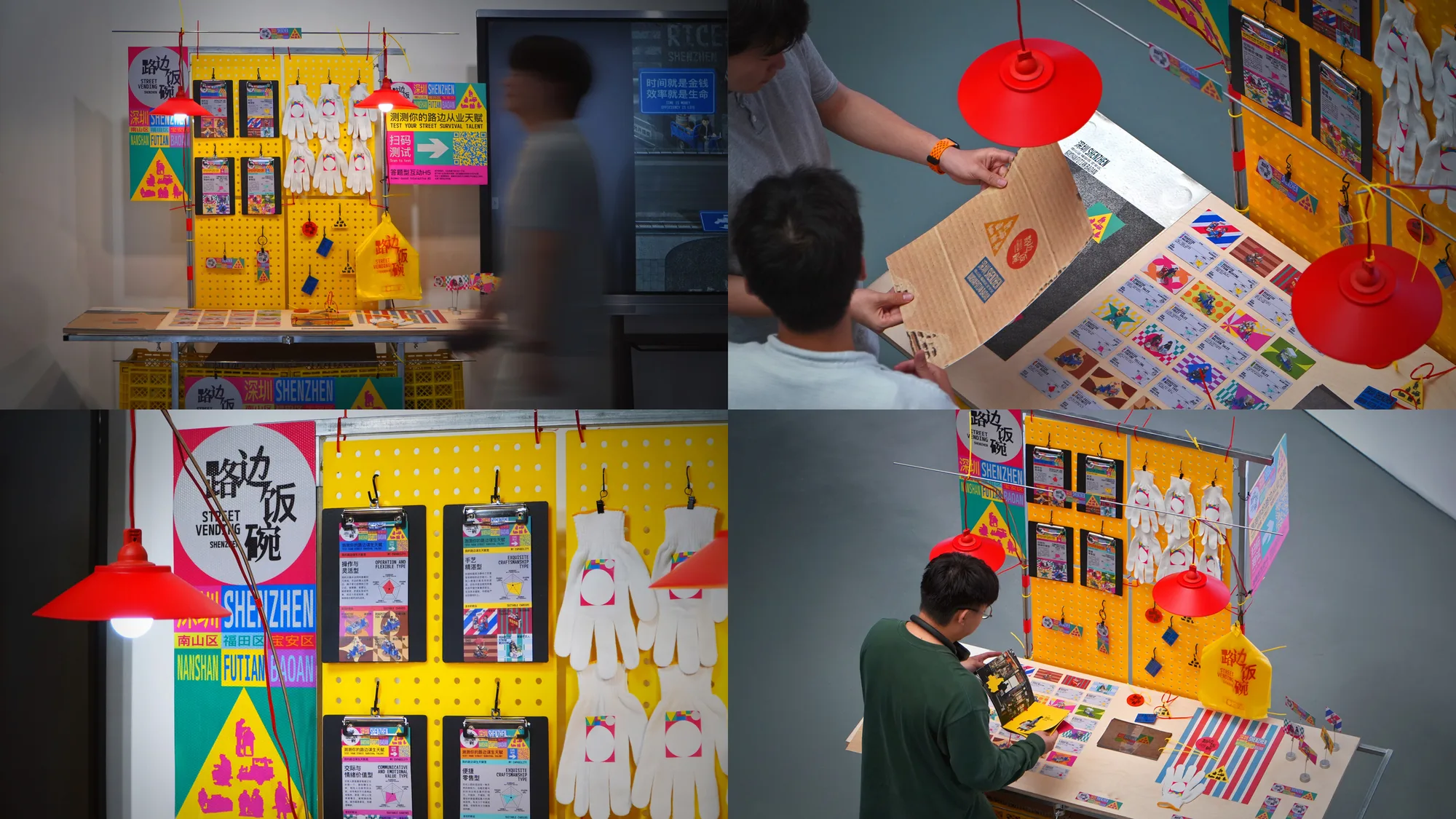
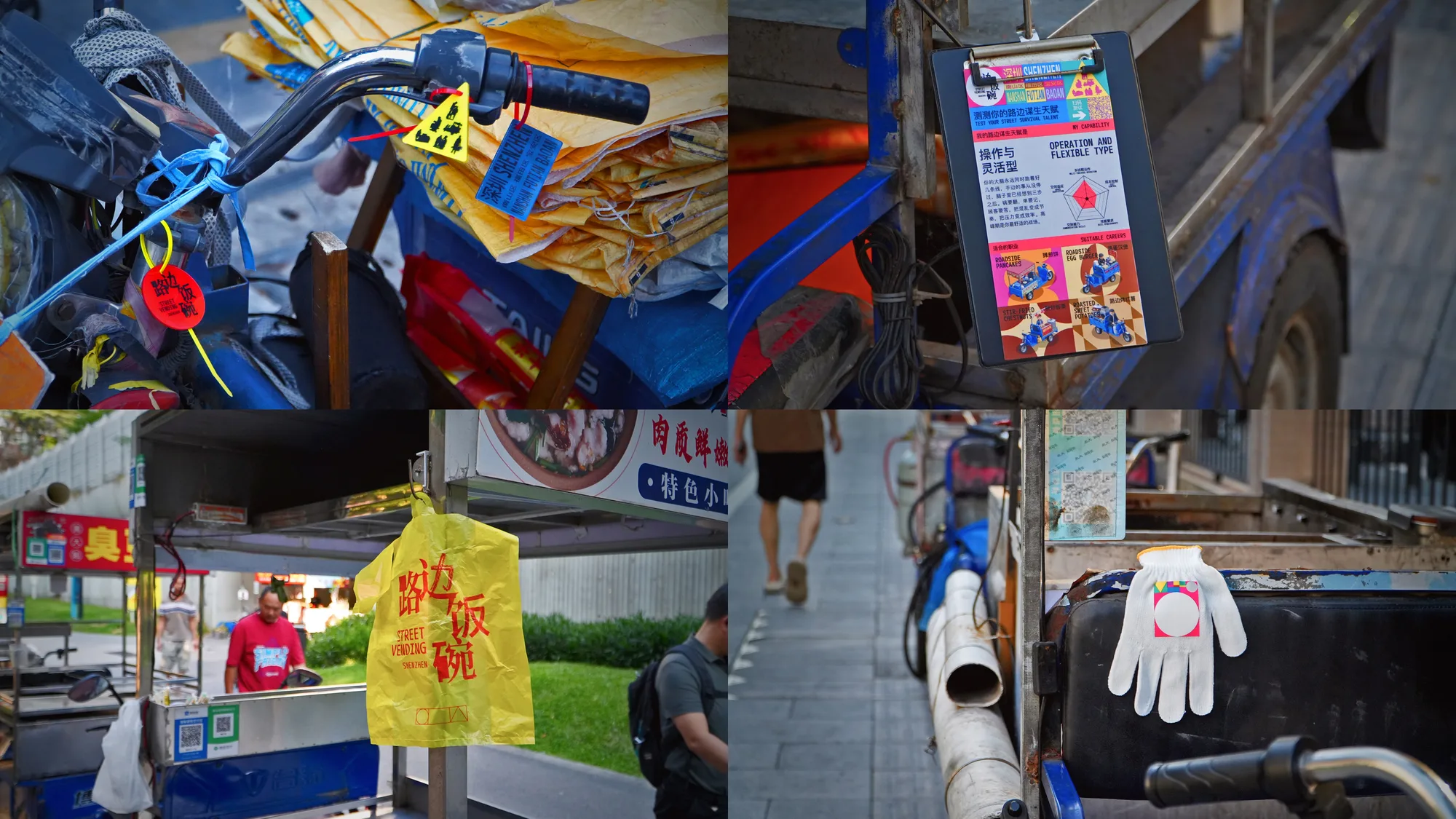
作品以深圳福田、南山、宝安三区田野调研为基础,以视觉叙事设计为介入手段,探讨路边从业群体其劳动实践缺乏有效的职业视觉表达,导致公众的认知长期停留在模糊的阶层标签,而非具体的职业判断的核心问题。记录分析其劳动形态与场景并提出“看见-转译-识别”三段式叙事框架;产出标识设计与田野手册,提炼16种路边职业分为4个类型配以“五维职业能力”雷达图的职业名片以及场景化再现海报,最后以5道日常情景题的轻量化线上互动测试,测测最接近哪种路边能力纬度和路边职业。期望通过这套视觉叙事手段减轻公众对于路边从业群体的负面认知,并能以职业能力和职业价值的视角看待。
Based on field research in Futian, Nanshan, and Bao'an districts of Shenzhen, this work uses visual narrative design as an intervention to explore the lack of effective visual representation of the work practices of roadside workers. This leads to public perception remaining focused on vague class labels rather than the core issue of specific occupational judgment. The work records and analyzes their work patterns and scenarios, proposing a three-part narrative framework of "seeing-translating-recognizing." It produces logo designs and a field manual, extracting 16 roadside occupations into four types, each accompanied by a "five-dimensional occupational ability" radar chart as a professional name card, and scene-based posters. Finally, a lightweight online interactive test with five everyday scenario questions allows users to determine which roadside ability dimension and occupation they are most likely to be familiar with. The aim is to alleviate negative public perceptions of roadside workers through this visual narrative approach and to encourage a view of them from the perspective of professional ability and value.
Based on field research in Futian, Nanshan, and Bao'an districts of Shenzhen, this work uses visual narrative design as an intervention to explore the lack of effective visual representation of the work practices of roadside workers. This leads to public perception remaining focused on vague class labels rather than the core issue of specific occupational judgment. The work records and analyzes their work patterns and scenarios, proposing a three-part narrative framework of "seeing-translating-recognizing." It produces logo designs and a field manual, extracting 16 roadside occupations into four types, each accompanied by a "five-dimensional occupational ability" radar chart as a professional name card, and scene-based posters. Finally, a lightweight online interactive test with five everyday scenario questions allows users to determine which roadside ability dimension and occupation they are most likely to be familiar with. The aim is to alleviate negative public perceptions of roadside workers through this visual narrative approach and to encourage a view of them from the perspective of professional ability and value.
客户








XIN.CHENG
Chengxinchengxincheng@Gmail.com
版权所有 © 程鑫XIN.CHENG